An elf as avatar
 Ulrich Telle
Photo above: Heinzelmännchen diorama (at the entrance to Drachenfels (Siebengebirge)), User:Yoshi, Wikipedia
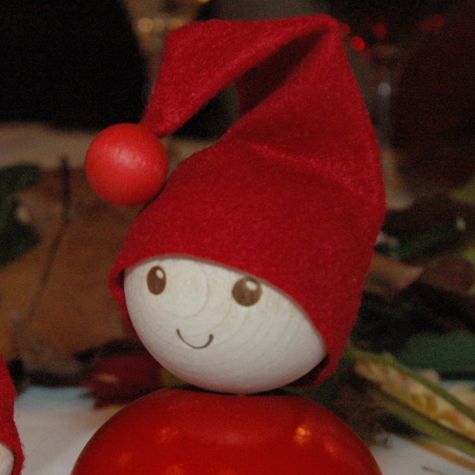
In the past, I have been asked several times how I came up with the idea of using the image of a Finnish “tonttu” (elf) as the avatar for my GitHub account (and now also for my homepage). This is based on a little anecdote from my professional life:

AI-generated by ChatGPT (OpenAI DALL·E, 2026).
Concept: Elves answer mails over night.
But I really liked the idea of being compared to a mysterious elf.
My hometown Cologne
It is important to note that Cologne has always been my hometown and that, according to legend, the Heinzelmännchen were Cologne’s household spirits who did the citizens’ work at night while they slept. Furthermore, just 35 kilometers (22 miles) from Cologne is the Siebengebirge, which some people associate with the Grimm fairy tale Snow White and the Seven Dwarfs. And there, in the Siebengebirge, at the entrance to the Drachenfels, you will find the Heinzelmännchen diorama shown in the picture at the beginning of this article. And so the connection to Snow White is made.
The Heinzelmännchen
August Kopisch wrote down the story of Cologne’s Heinzelmännchen in poetic form back in 1836. And I would like to share this poem with my readers:
Long ago in Cologne town fair,
Life seemed so easy everywhere.
No task too hard, no work too slow,
For all was done by hands we didn’t know.
At night, while people slept in bed,
The little men moved quick and sped.
Each chore completed, neat and bright,
So morning came with all things right.
The joiners laid their tools aside,
Yet every door and frame was plied.
The carpenters’ hammers beat no more,
But every nail was set secure.
The bakers, dreaming of the dawn,
Found loaves all baked and golden-brown.
The spinning wheels had turned so fast,
Thread neat and ready, none was last.
The seamstresses awoke with cheer,
Their floors were clean, no dirt was near.
Their cloth was cut, their stitches tight,
Each garment perfect, every seam right.
The cobbler’s shoes, the tailor’s vest,
All finished while they took their rest.
No mortal eye had seen the crew,
Yet all was done, as if on cue.
The little men, so small and spry,
Worked through the night, then said goodbye.
They came unseen and left the same,
Their kindness never sought for fame.
From city streets to baker’s shop,
From carpenter’s hall to spinning top,
All chores were done without a sound,
And joy and comfort all around.
But one wife, curious and sly,
Decided she would see them try.
She scattered peas upon the floor,
To watch the elves work as before.
They slipped, they tumbled, hearts did quake,
And soon her trick made them forsake.
No longer helpful, swift, or keen,
They vanished, never to be seen.
Since that strange night in Cologne town,
No hidden hands go bustling ‘round.
Each baker, tailor, cobbler, maid,
Now does the work that once was paid.
The magic gone, the secret lost,
Yet still the tale is told, embossed.
A city sleeps, and works with care,
No little men to help them there.
But stories live of what had been,
Of tiny men, so quick, unseen.
Their deeds remind us how delight,
Can visit quietly in the night.
Though now they’re gone, the legend stays,
In children’s songs and tales of praise.
A time when work was light and fair,
And wonder lingered in the air.
So think of them when tasks feel long,
The unseen helpers, swift and strong.
And maybe, if you dream just right,
They’ll tiptoe softly through your night.
For kindness, quiet, skilled, and small,
Can make the hardest burden small.
And in their honor, stories shine,
The little men of Cologne, divine.
Original text source:
August Kopisch, Die Heinzelmännchen, Dunker und Humblot Verlag, 1836,
Wikisource
English rhymed translation created with the assistance of ChatGPT (OpenAI), 2026.
Finnish ’tontut’ (elves)
Just like in Cologne, brownies and elves have a very long history in Finland, where they are known as tontut. Like the Cologne Heinzelmännchen (brownies), they are good household spirits. In this country, most people are familiar with the Finnish Christmas elves, who help Santa Claus in Lapland, north of the Arctic Circle. But elves are not only Christmas elves, they also come in summer, forest, frost, water, and sauna varieties. If you don’t believe it, take a look at Aarikka, a Finnish company that specializes in decorative items.
You can find out more about Finnish elves in the Legend of the Tonttu or in a two-part FinnVillage blog post (Part 1 🇩🇪 Available in German only. , Part 2 🇩🇪 Available in German only. ).
My Avatar